When water gets on a hardwood floor, the first thing to do is dry it fast and the second is wait before deciding anything. Wood cups when it absorbs moisture, and a lot of that cupping flattens back out over several weeks as the floor dries. Boards that stay cupped or crowned after they've fully dried are the ones that need replacing.
The mistake that costs the most money is tearing out a floor in week one. Plenty of floors that look ruined the day after a leak come back on their own. Give it time and you may be looking at a repair instead of a replacement.
Key takeaways
- Dry the floor immediately, then wait several weeks before judging the damage.
- Cupping often reverses as moisture leaves. Don't replace on day one.
- Repair when damage is localized. Replace when boards are rotted, buckled or blackened.
- Board replacement plus refinishing usually costs far less than a new floor.
- Subfloor moisture has to be resolved first, or the new wood does the same thing.
What should you do in the first 24 hours?
Stop the source, then get the water out. Speed matters more here than technique.
- Fix the leak first. Drying a floor while water is still arriving accomplishes nothing.
- Remove standing water with towels or a wet vacuum. Don't wait for it to evaporate.
- Pull up rugs and furniture. Anything trapping moisture against the boards makes it worse.
- Move air across the floor with fans, and run a dehumidifier if you have one.
- Don't apply heat directly. Drying wood too aggressively causes splitting and checking.
If the water came from a sewage backup or floodwater rather than clean supply lines, treat that differently and call a remediation service. Contamination is a health question before it's a flooring question.
Why does wood cup, and does it reverse?
Cupping happens when the underside of a board takes on more moisture than the top. The bottom swells, the edges lift higher than the center, and the board takes on a shallow trough shape.
The important part is that it's often temporary. As the moisture equalizes back out, the board flattens. That can take weeks, sometimes longer, and it depends on how much water there was and how well the space dries.
Crowning is the opposite shape, high in the middle, and it usually means someone sanded a cupped floor before it dried. Sanding flat a board that's still swollen removes wood from the raised edges, so when it finally dries and shrinks, the middle sits proud. That's an expensive mistake and it's why we won't sand a floor until moisture readings come back where they should be.
How do you tell repair from replace?
After the floor has dried, a few things separate a fixable floor from a lost one.
| Condition | Usual answer |
|---|---|
| Mild cupping, flattens as it dries | Dry, then refinish if needed |
| A few damaged boards in one area | Replace those boards, blend, refinish |
| Black or grey staining in the grain | Replace affected boards |
| Boards lifted off the subfloor (buckling) | Replace, and check the subfloor |
| Soft or spongy underfoot | Replace, likely subfloor damage too |
| Widespread damage across most of the floor | Full replacement |
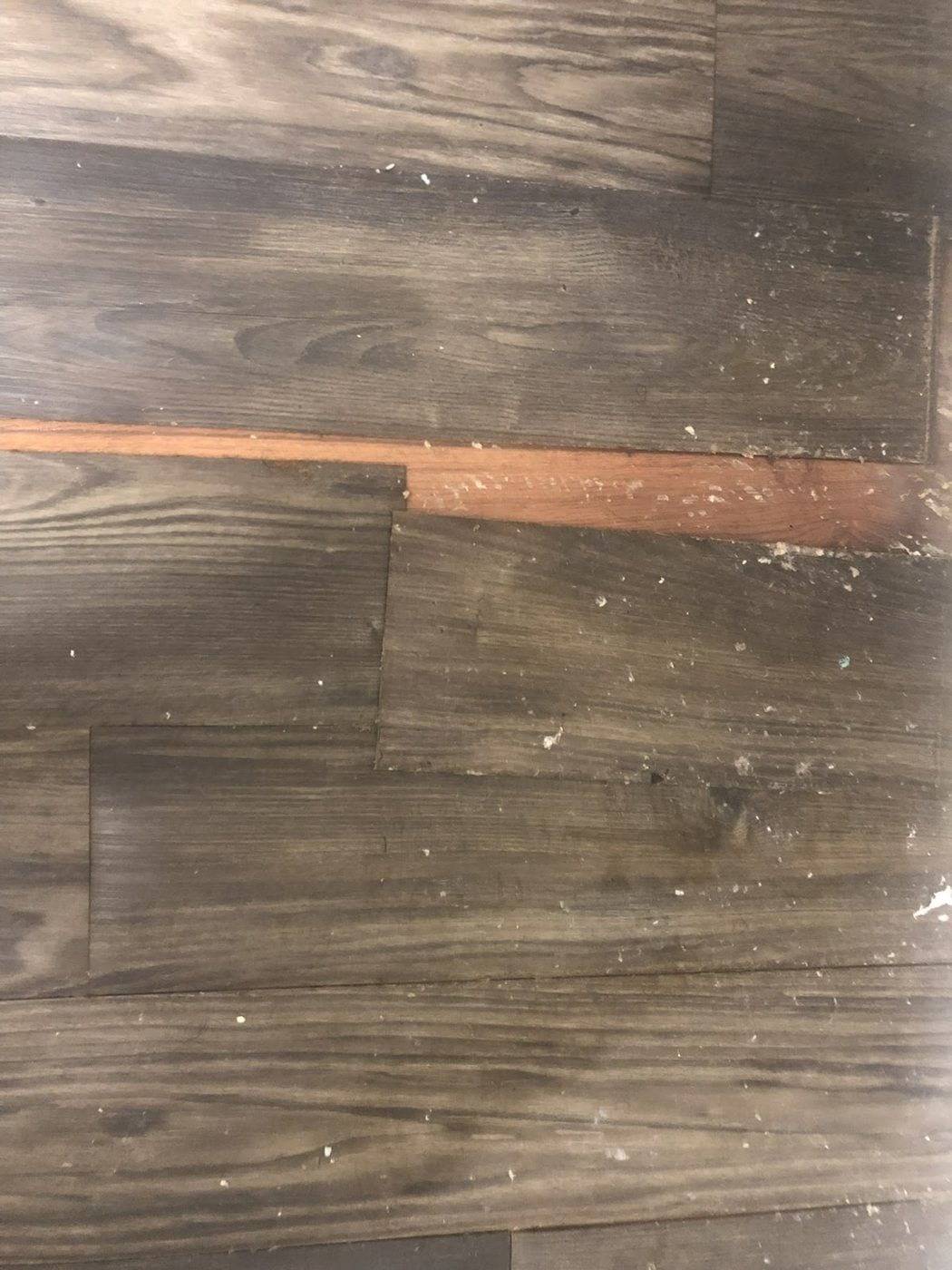
Black staining is worth singling out. Dark discoloration in the grain usually means the water sat long enough for the wood to start breaking down, and it doesn't sand out. Those boards come out.
Can new boards be matched into an old floor?
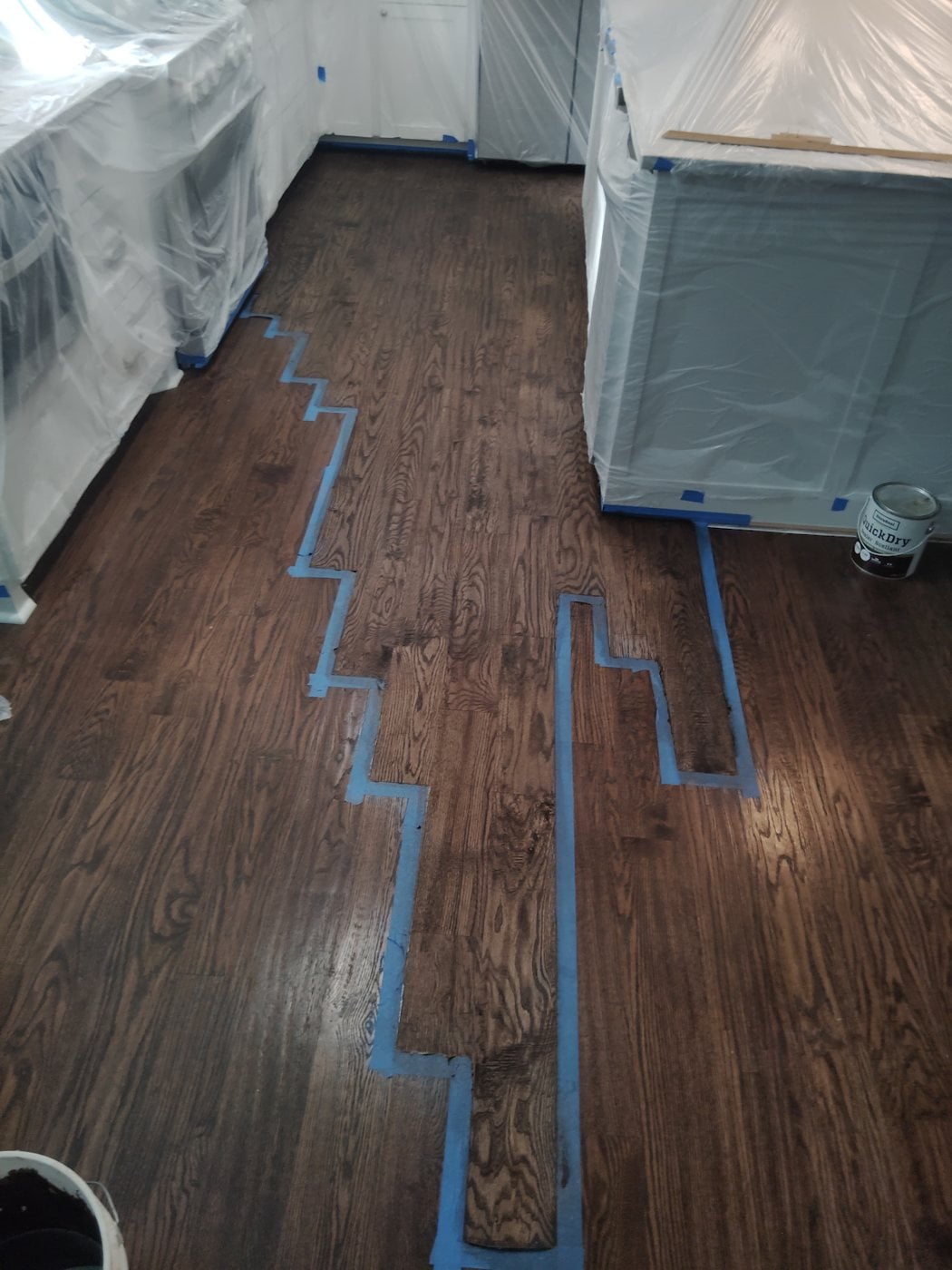
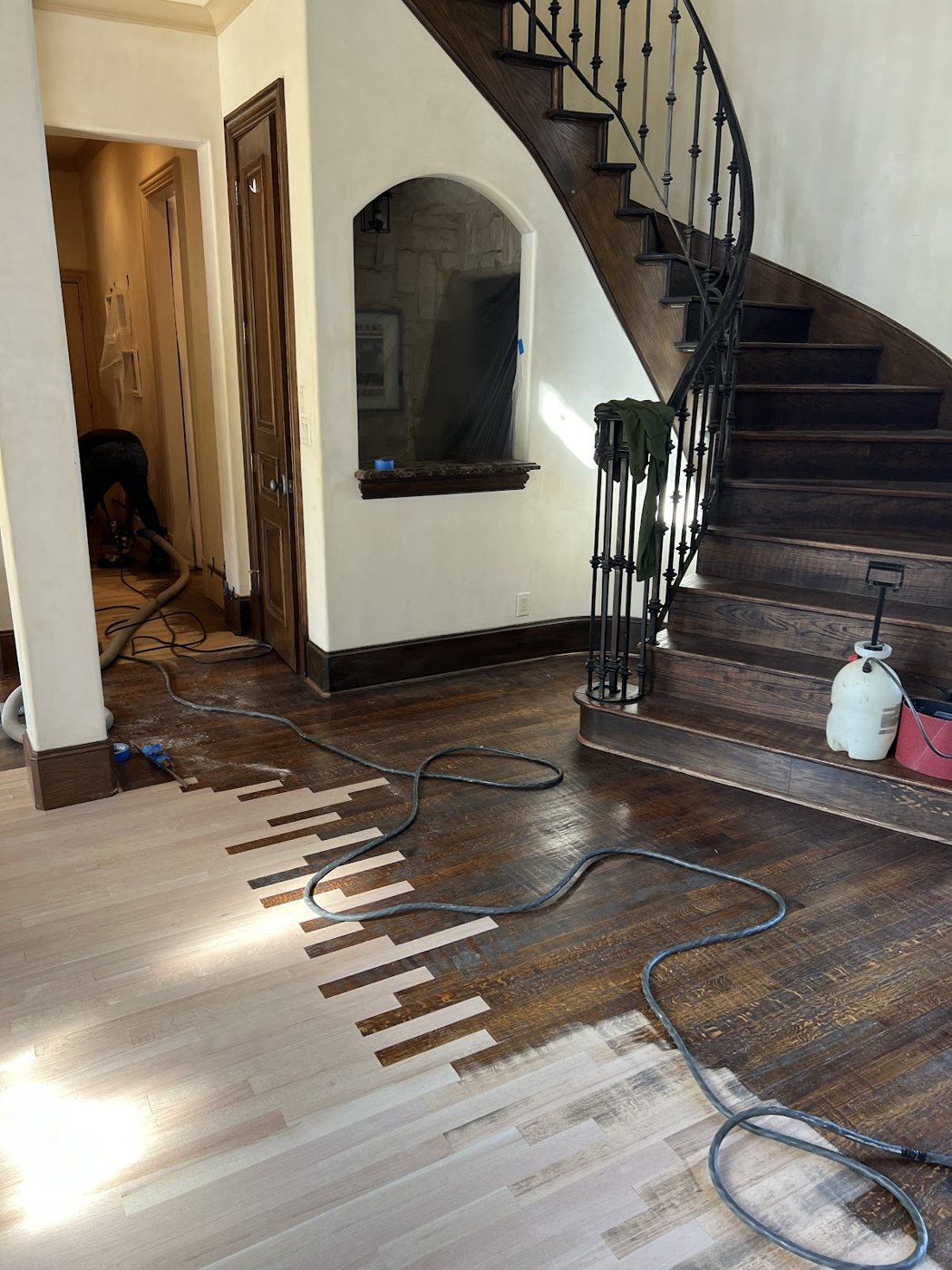
Yes, and done properly you won't find the repair. We match species, grain and board width, then weave the new pieces in so the end seams stagger the way the rest of the floor does. A patch that runs as a clean rectangle is obvious forever. A woven repair disappears.
The other half is finishing. New wood takes stain differently than wood that's been down for years, so the repair area gets sanded and finished as part of the surrounding floor rather than spot-coated. That's what makes the color and sheen line up.
On engineered floors, matching is harder because products get discontinued. If your original install left spare planks in the garage, they're worth their weight. See hardwood floor repair for how we approach it.
What about the subfloor?
This is the step people skip and regret. If moisture is still in the subfloor, a new hardwood floor laid over it will cup, gap or buckle within a year. The wood is doing exactly what it should; the problem is underneath it.
Before new material goes down, the subfloor has to read dry on a meter and be flat and solid. Plywood that has delaminated or swollen gets replaced. On slab construction, which is common across Dallas-Fort Worth, that can also mean testing for moisture coming up through the concrete.
Skipping this turns one repair into two. It's also the reason we won't quote a firm replacement price until we've checked what's under the boards.
Will insurance cover it?
Often, depending on the cause. Sudden and accidental water damage, a burst supply line or an appliance failure, is commonly covered. Slow leaks that went unnoticed for months and general maintenance issues usually aren't.
Practical advice regardless of your policy: photograph everything before you clean up, keep a record of what you did and when, and don't dispose of damaged material until the adjuster has seen it. We're happy to provide a written scope and estimate for a claim, which is usually what the adjuster wants.
Frequently asked questions
How long does it take for a wet hardwood floor to dry?
Several weeks is typical for the wood to return to normal moisture content, longer if the subfloor got wet. Surface dryness happens in days, but that isn't the same thing. We take meter readings rather than going by appearance.
Can cupped hardwood floors be fixed without replacing them?
Frequently, yes. If the boards flatten as they dry and there's no staining or structural damage, the floor often just needs refinishing once moisture readings are normal. Sanding before that point creates crowning.
Does water damage always mean the whole floor?
No. Most leaks damage a localized area, not the whole floor. Board replacement in the affected zone plus refinishing the surrounding area typically costs a fraction of a full replacement.
What causes black stains on hardwood after water?
Prolonged moisture, sometimes with mold or mineral reaction in the wood. Unlike surface marks, black staining penetrates the grain and doesn't sand out. Those boards need replacing.
Is engineered hardwood more or less water resistant?
More stable against humidity swings, but not waterproof. Standing water can delaminate the layers, and a damaged engineered plank generally can't be sanded back. For genuinely wet areas, luxury vinyl plank is the more appropriate choice.
Had a leak?
Get it dried, then let us look before you decide anything. We take moisture readings, tell you which boards are actually lost, and quote the repair rather than defaulting to replacement. Plenty of floors we're called about turn out to need less work than the homeowner feared.
Bernard Hardwood Floors has worked on water damaged floors across Dallas-Fort Worth since 1999. Family owned, licensed and insured, 4.9 stars across 127 Google reviews.
Request a free estimate or call (469) 870-5631, Monday through Saturday, 8am to 6pm.
Related reading: Hardwood floor repair and Refinish or replace?