
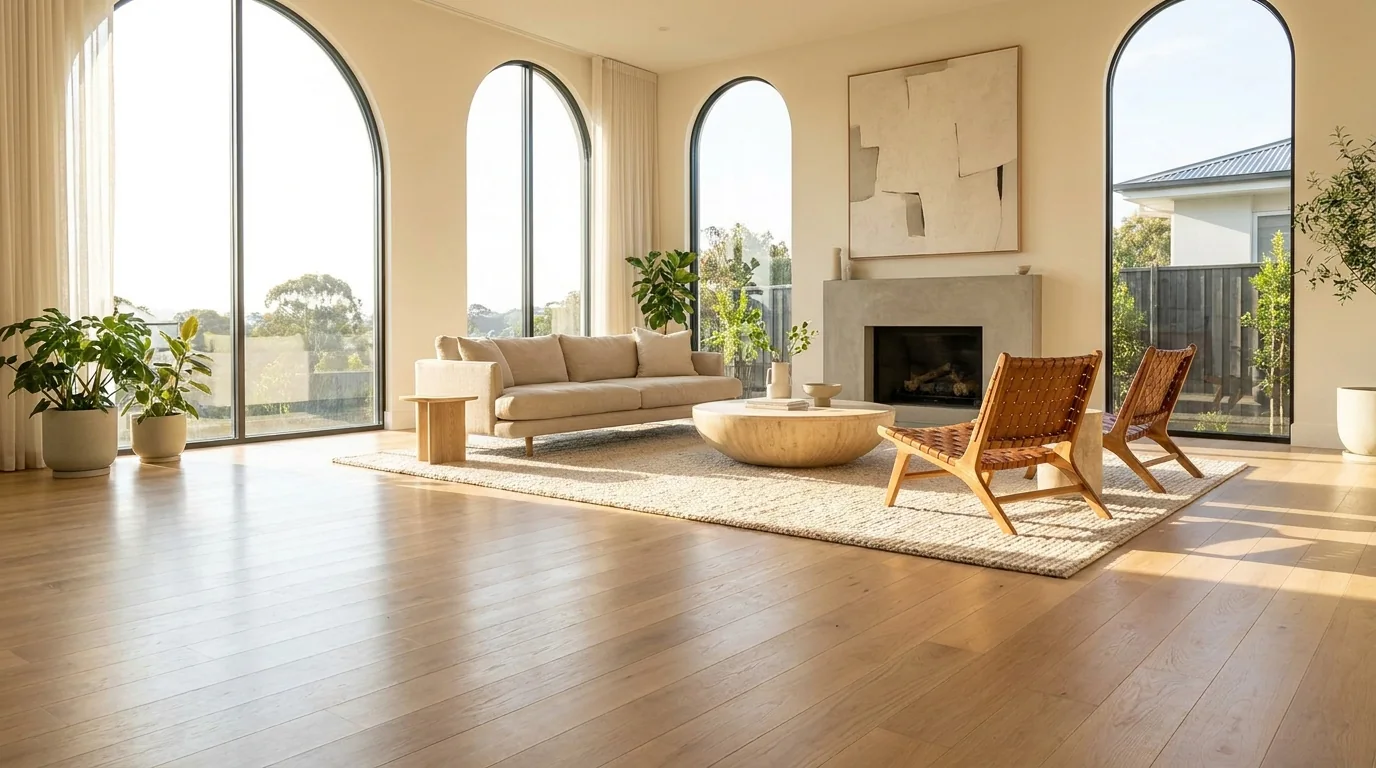
Yes, most engineered hardwood can be refinished, but not all of it. The deciding factor is the thickness of the real wood layer on top, called the wear layer. Floors with 3mm or more can usually take a full sand and refinish. Floors under 2mm generally cannot, and sanding them is how a good floor gets destroyed in an afternoon.
This is the question we get asked most in Dallas-Fort Worth homes, and for good reason. Engineered wood is everywhere in North Texas because it holds up better on concrete slabs. But "engineered" covers everything from a paper-thin veneer to a plank you'd struggle to tell from solid oak. The answer depends entirely on which one is under your feet.
Key takeaways
- Engineered hardwood can be refinished if the wear layer is thick enough. 3mm or more is the practical threshold for a full sand.
- Each refinish removes roughly 0.5mm to 1mm of wood (Sustainable Lumber Co.), so a 3mm layer supports two to three cycles.
- A 2mm wear layer is a one-shot floor. Under 2mm, sanding usually is not worth the risk.
- If your floor is too thin to sand, a screen and recoat still refreshes it without touching the veneer.
- You cannot tell thickness by looking at the surface. It has to be measured at an edge.
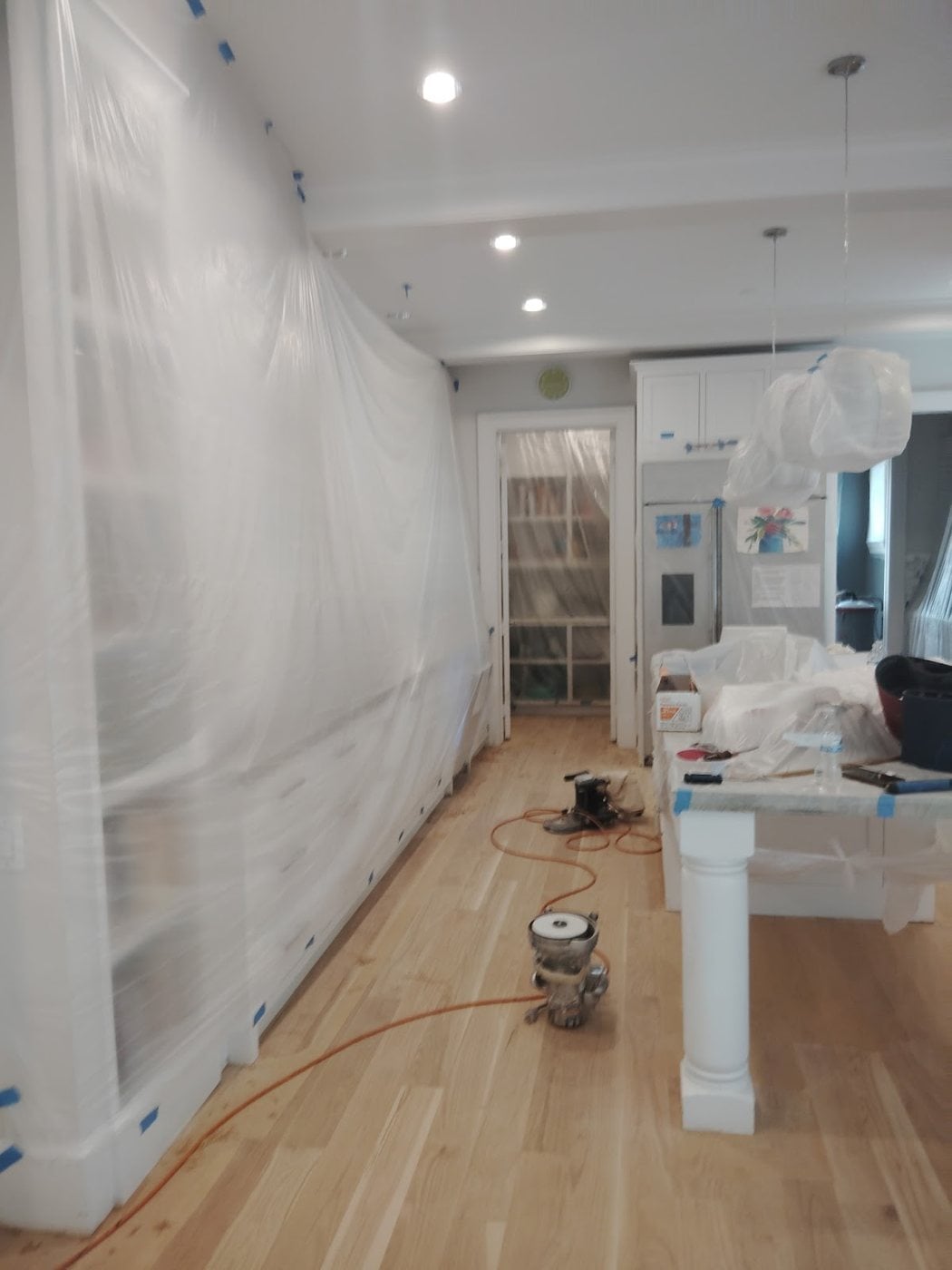
Can engineered hardwood be refinished?
Most can. Engineered hardwood is real wood on top of a plywood or HDF core, so there is genuine timber to sand. What limits you is how much of it there is. Industry guidance puts the safe threshold at roughly 2mm minimum, with 3mm and above comfortable for a full sand and finish (AO Saves Wood Floors).
Below that, the sander reaches the core. Once you hit the plywood, that board is finished. There is no fixing it short of replacing the plank, and matching a discontinued engineered product years later is rarely straightforward.
So the honest answer to "can it be refinished" is "measure first, then decide." Any contractor who quotes a full sand on engineered wood without checking the wear layer is guessing with your floor.
How do you find out how thick your wear layer is?
You measure it at an exposed edge. The wear layer is invisible from above because the surface looks identical whether there's 1mm or 6mm underneath. There are three reliable places to look.
- A floor vent or register cutout. The cut edge shows the layers in cross section. This is the easiest check in most homes.
- A threshold or stair nosing. Anywhere the plank ends and the edge is visible.
- A leftover plank. If the original install left spares in the garage, that answers it in seconds.
Look for the line where the top layer meets the core. On engineered wood you'll see a distinct grain change. Solid wood shows continuous grain all the way through. If you can find your original purchase paperwork, the spec sheet lists the wear layer outright, which saves the guesswork.
When we quote a refinish on engineered flooring, this measurement happens before we put a number on paper. It takes about a minute and it determines whether the job is even possible.
How many times can engineered hardwood be refinished?
It depends on the wear layer, because each pass removes roughly 0.5mm to 1mm of wood. That arithmetic sets the ceiling on the life of the floor.
| Wear layer | Full refinishes | What that means in practice |
|---|---|---|
| Under 2mm | 0 | Do not sand. Screen and recoat only. |
| 2mm | 1, sometimes 2 | One careful pass. Treat it as your only one. |
| 3mm | 2 to 3 | The common residential spec. Comfortable to refinish. |
| 4mm | 3 to 4 | Good for busy households. |
| 6mm | 5 or more | Behaves much like solid wood over its lifetime. |
Those figures line up across the trade. A 3mm wear layer supports two to three refinishing cycles with an estimated service life around 40 to 50 years, while 6mm can be sanded roughly five times or more (From The Forest). The variation between sources comes down to how aggressively each contractor sands, which is exactly why a light touch matters on engineered wood.
What if your wear layer is too thin to sand?
You still have options, and they're cheaper than the full job. A screen and recoat abrades only the existing finish, not the wood, then lays down a fresh protective coat. It resets surface scratches and dullness without removing any of your wear layer.
That's the right call for a large share of the engineered floors we see. It's a one day job, there's no dust event, and you're walking on it the next day. You can repeat it every few years indefinitely, because it never touches the veneer.
What a recoat will not do is remove deep gouges, pet stains that have soaked into bare wood, or change your stain color. Those need sanding, and if the floor can't take sanding, then board replacement or a new floor is the honest answer. We'd rather tell you that at the estimate than halfway through the job.
For the detail on that process, see our screen, buff and recoat service.
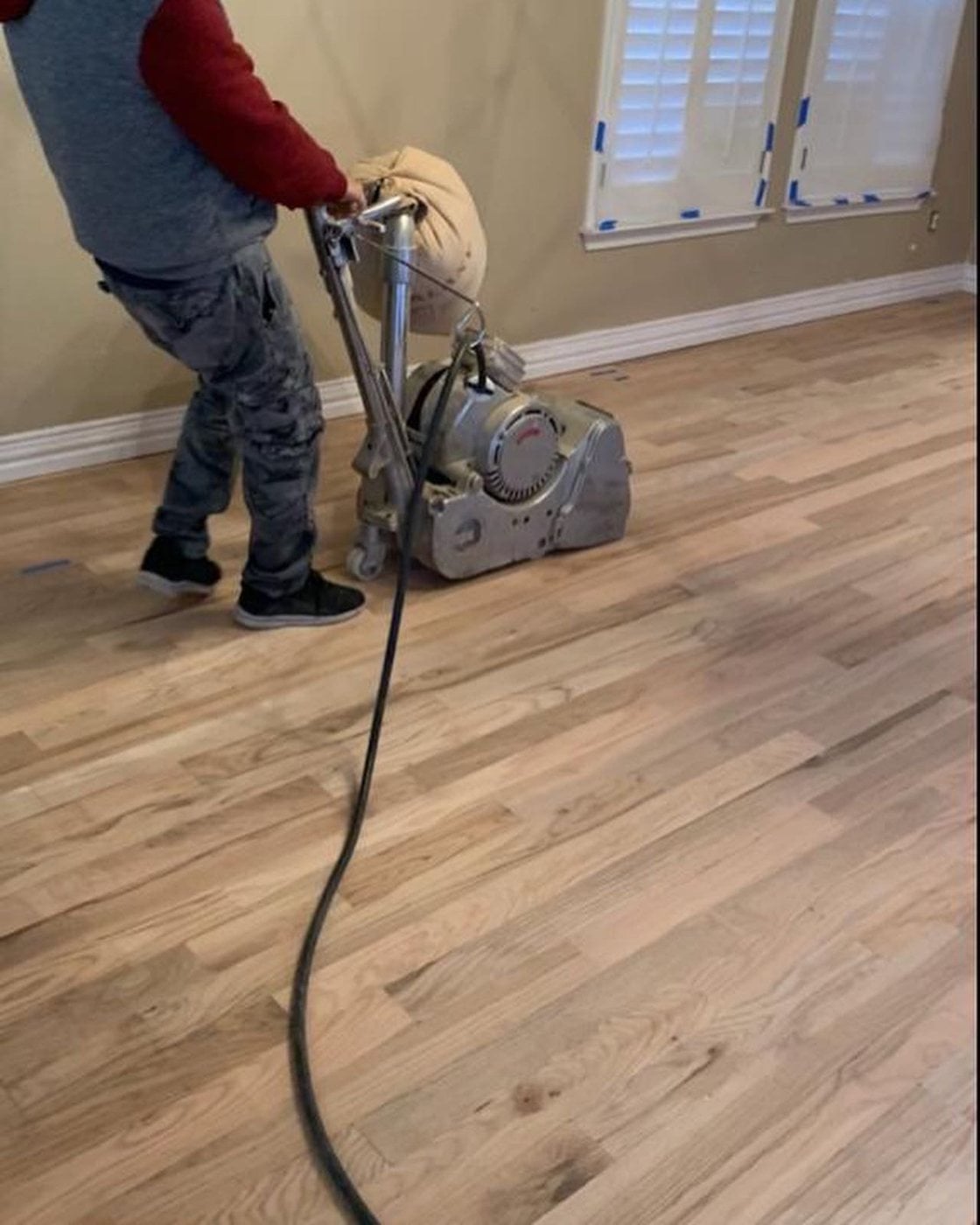
Why does this matter more on DFW slab homes?
Engineered hardwood is disproportionately common across Dallas-Fort Worth because so much of our housing sits on concrete slab. Engineered planks handle the moisture and movement of slab-on-grade construction better than solid wood does, so builders reach for them constantly.
The practical consequence is that a lot of North Texas homeowners own a floor they assume is solid oak and isn't. They call expecting a straightforward sand and finish, and the wear layer decides otherwise. Homes built in the last twenty years across Plano, Frisco, Irving and Coppell are especially likely to have engineered wood with a thinner veneer than the owner realizes.
The other local factor is humidity swing. North Texas moves between damp spring and bone-dry winter, and wood responds. That seasonal movement is a reason to keep a protective finish intact rather than sanding it back repeatedly. On a thin wear layer, every unnecessary sand is life you don't get back.
What does refinishing engineered hardwood cost?
Refinishing engineered wood costs about the same as solid, because the labor is nearly identical. The sanding is more careful and slower, but the steps are the same. Local ranges sit in line with standard refinishing, which nationally runs roughly $3 to $8 per square foot depending on condition and finish (HomeGuide).
A screen and recoat is substantially less, generally running well under half the cost of a full sand because there's no sanding, no stain and far less labor. If your wear layer rules out sanding anyway, that's the budget working in your favor.
Our full breakdown of DFW ranges by service is on the hardwood flooring cost guide.
Frequently asked questions
How can I tell if my floor is engineered or solid?
Look at a cut edge at a floor vent or threshold. Engineered wood shows a distinct top layer over a plywood or HDF core with a visible grain change. Solid wood has continuous grain top to bottom. A leftover plank or the original spec sheet answers it immediately.
Can you change the stain color on engineered hardwood?
Only if the wear layer is thick enough for a full sand, since color change requires going back to bare wood. On a floor with 3mm or more, yes. On anything thinner, you're limited to a clear recoat that keeps the existing color.
What happens if you sand through the wear layer?
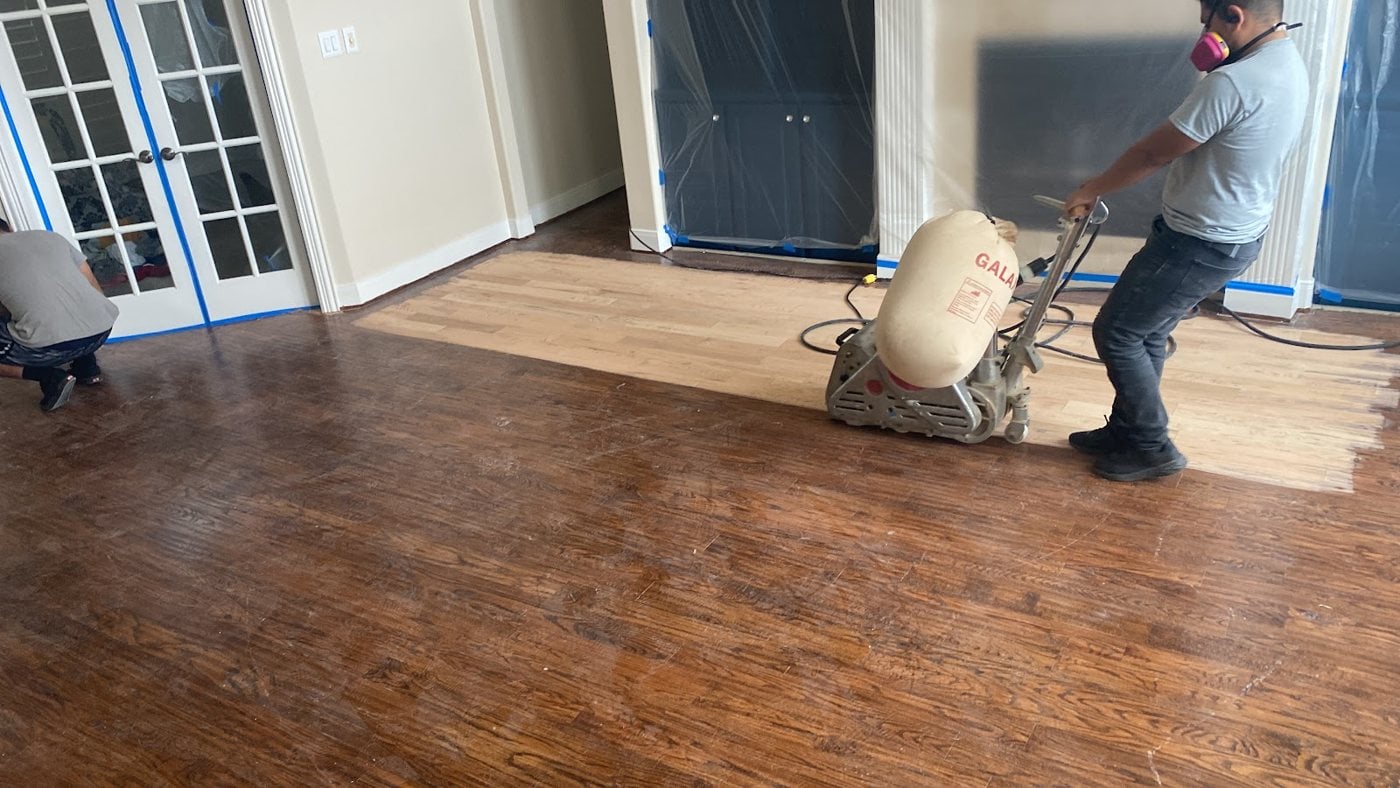
You expose the plywood or HDF core, and that plank is permanently ruined. It cannot be refinished, stained or repaired back. The only fix is replacing the affected boards, which means matching a product that may no longer be manufactured.
Is refinishing engineered hardwood worth it?
If the wear layer supports it, yes. Refinishing costs far less than replacing the floor and it buys years of additional service life. When the veneer is too thin, a recoat keeps it looking good for a fraction of the price of replacement.
How long does refinishing engineered hardwood take?
Plan on 3 to 5 days for a typical job. Sanding is the fast part. The finish coats and their cure time set the schedule, and rushing them leaves the floor soft and prone to marking.
Not sure what you have?
That's the normal situation, and it's a short conversation to resolve. We measure the wear layer, tell you plainly whether your floor can be sanded, and quote the option that actually fits it. If the honest answer is a recoat rather than a refinish, that's what we'll tell you, and it'll cost you less.
Bernard Hardwood Floors has been refinishing wood floors across Dallas-Fort Worth from our shop in Irving since 1999. Family owned, licensed and insured, 4.9 stars across 127 Google reviews.
Request a free estimate or call (469) 870-5631, Monday through Saturday, 8am to 6pm.
Related reading: Engineered vs solid hardwood: which is right for your DFW home? and Refinish or replace: how to tell which your floor needs.