
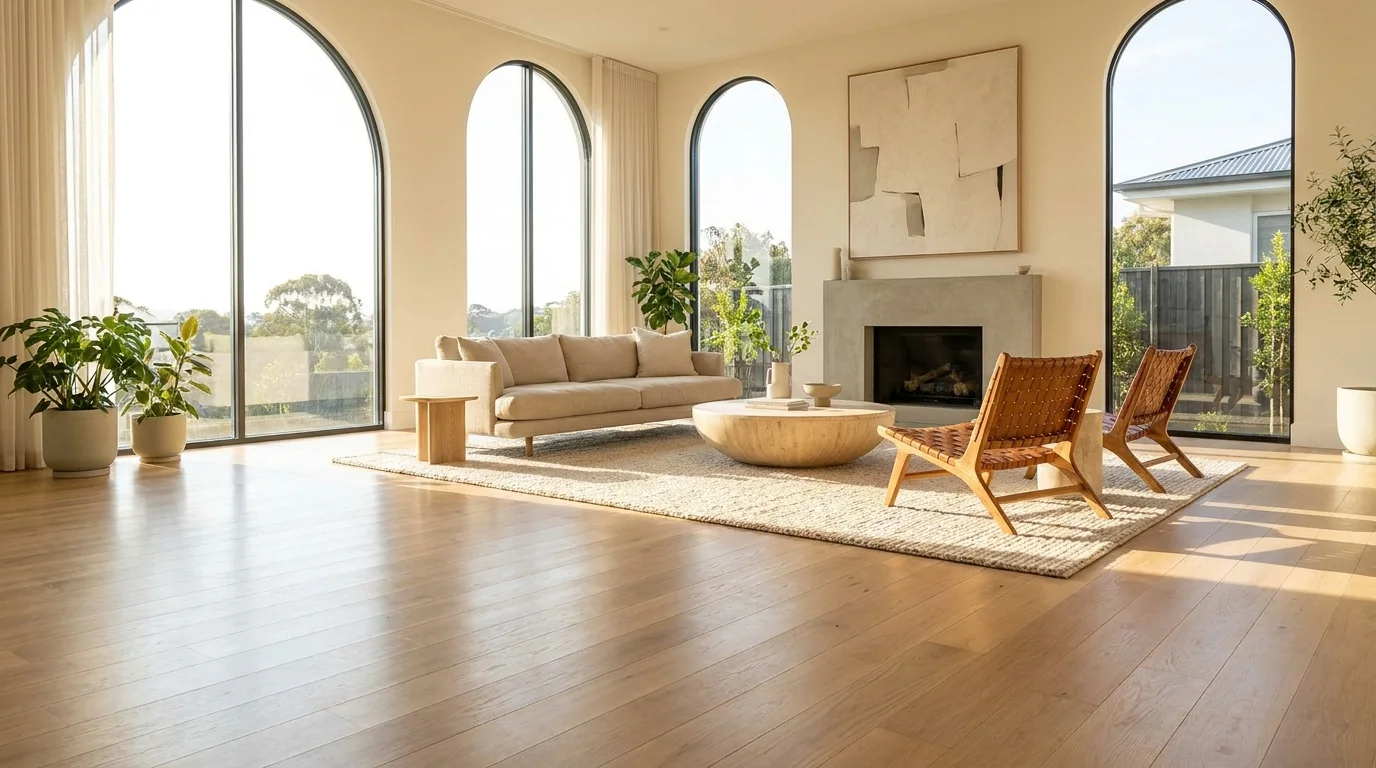
Refinishing stairs costs more per square foot than floors, and it takes longer, because almost all of it is hand work. A drum sander can’t touch a staircase. Every tread, riser, nosing and baluster gets done by hand, and the shape of a stair is what makes it slow.
It’s also the part of a job where corner-cutting shows up first. When a refinished house looks great in the open rooms and rough on the stairs, that’s where someone rushed.
Key takeaways
- Stairs are priced per step, not per square foot, because labor drives the cost.
- All of it is hand sanding. Machines don’t fit the geometry.
- Expect to lose use of the staircase for part of the job. Plan around it.
- Carpeted stairs can often be converted to finished wood, but check what’s underneath first.
- Balusters and railings are a separate decision with their own labor.
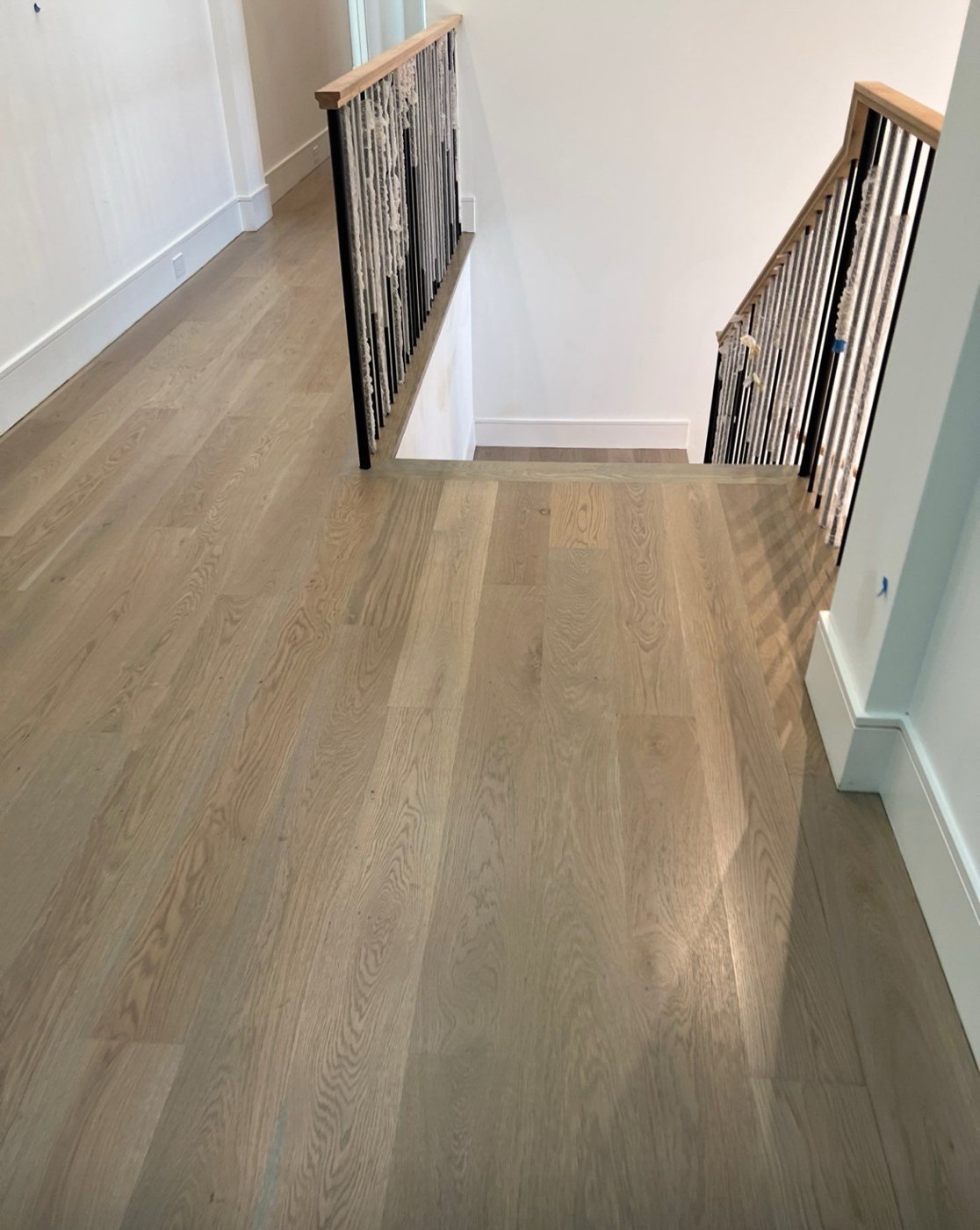
Why do stairs cost more than floors?
Because the machines that make floor refinishing efficient are useless on a staircase. A drum sander weighs a lot and runs flat. A staircase is a series of small horizontal and vertical surfaces meeting at edges, with a rounded nosing at the front of every tread.
So a crew works with palm sanders, detail sanders and hand blocks. Each tread is a small floor. Each riser is a vertical panel. The nosing is a curve that has to be sanded without flattening it.
A typical flight of 13 to 15 steps can take as long as a decent-sized room, despite having a fraction of the square footage. That’s why it’s quoted per step.
What’s involved, step by step?
- Assessment. What’s the wood, are treads solid or veneered, are there loose steps or squeaks to fix first.
- Removal. If carpet is coming off, that includes carpet, padding, tack strips and a lot of staples. Staples are the tedious part.
- Repair. Loose treads get secured, squeaks addressed, damaged nosings repaired or replaced.
- Sanding. Multiple grits by hand across treads, risers and nosings.
- Stain. Optional, and it should match the adjacent floor if there is one.
- Finish. Multiple coats, and these need to cure before anyone uses the stairs.
Fixing squeaks is easiest at this stage, when the treads are exposed. Doing it later usually means visible fasteners.
How do you get up and down during the job?
That’s the real planning question in a two-storey house, and it’s worth settling before work starts.
The common approach is to do every other step, let it cure, then do the rest. You can use the staircase throughout by stepping carefully on the finished ones. It takes longer overall but keeps the upstairs reachable.
The alternative is doing the whole flight at once, which is faster and produces a more uniform result, but takes the staircase out of service until the finish can bear traffic. If there’s a second staircase, that’s the easy answer.
We’ll tell you which approach we’re using and exactly when the stairs are usable. That’s the detail people most need for planning.
Can carpeted stairs be converted to wood?
Often, but you have to see what’s under the carpet first. Builders sometimes use finish-grade treads under carpet and sometimes don’t.
| What’s underneath | What it means |
|---|---|
| Solid hardwood treads | Sand and finish directly. Best case. |
| Construction-grade treads | Usually need retreading with finish-grade wood. |
| Plywood or particle board | New treads required. |
| Hardwood with heavy staple damage | Depends on depth. Some fills out, some doesn’t. |
Pulling back a corner of carpet on one step answers this in about two minutes, and it’s worth doing before anyone quotes. It’s the difference between refinishing and rebuilding.
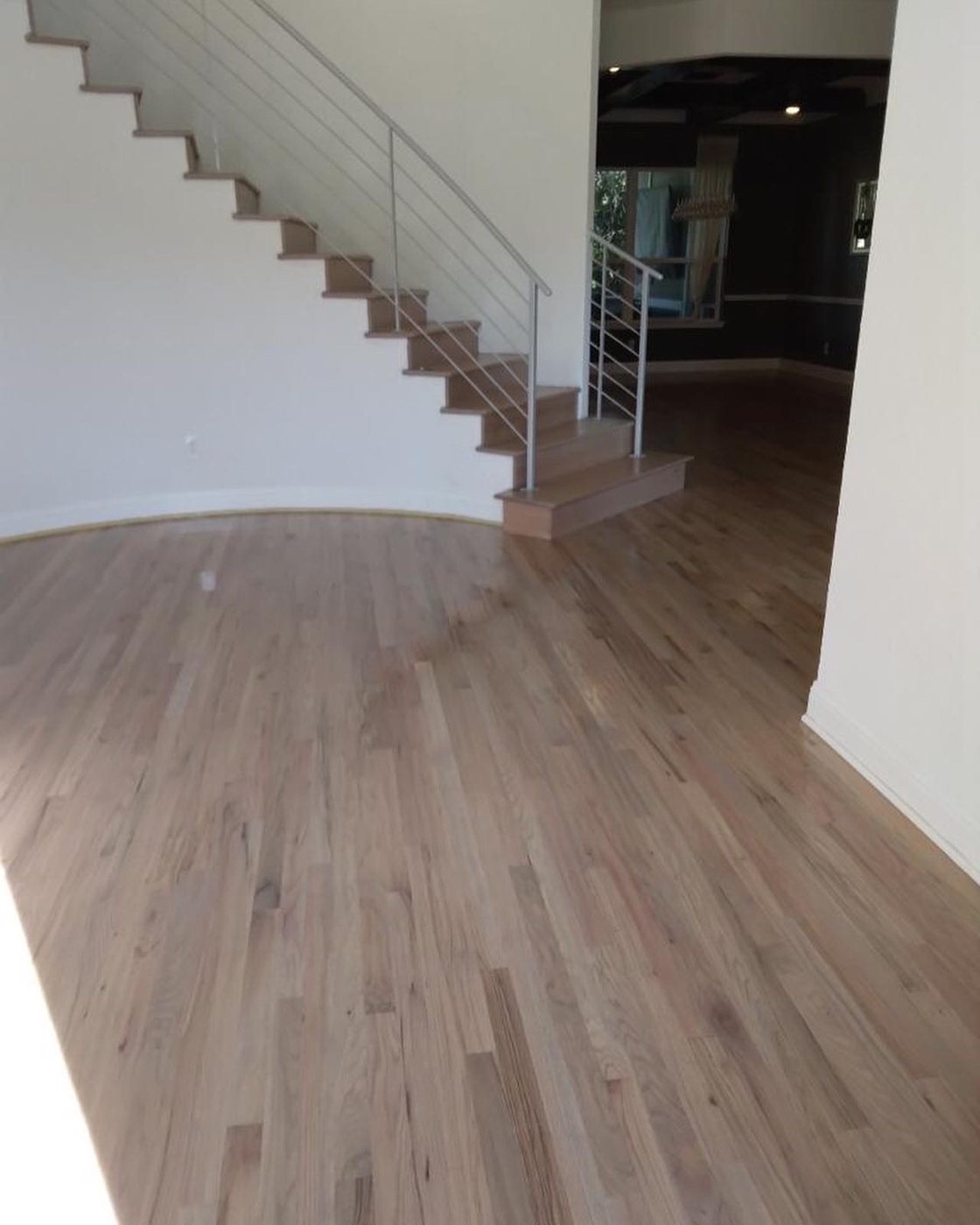
What about railings and balusters?
They’re separate work with their own labor, and they’re where a project can expand. Handrails are straightforward: sand and refinish like a tread. Balusters are not, because there are a lot of them and each is a shaped spindle.
A common middle path is refinishing the handrail and treads in wood while painting the risers and balusters. That’s a popular look in DFW homes, it costs less than refinishing everything, and it makes the wood elements stand out.
Worth deciding at the estimate rather than mid-job, since it changes both price and schedule.
Should stairs match the floors?
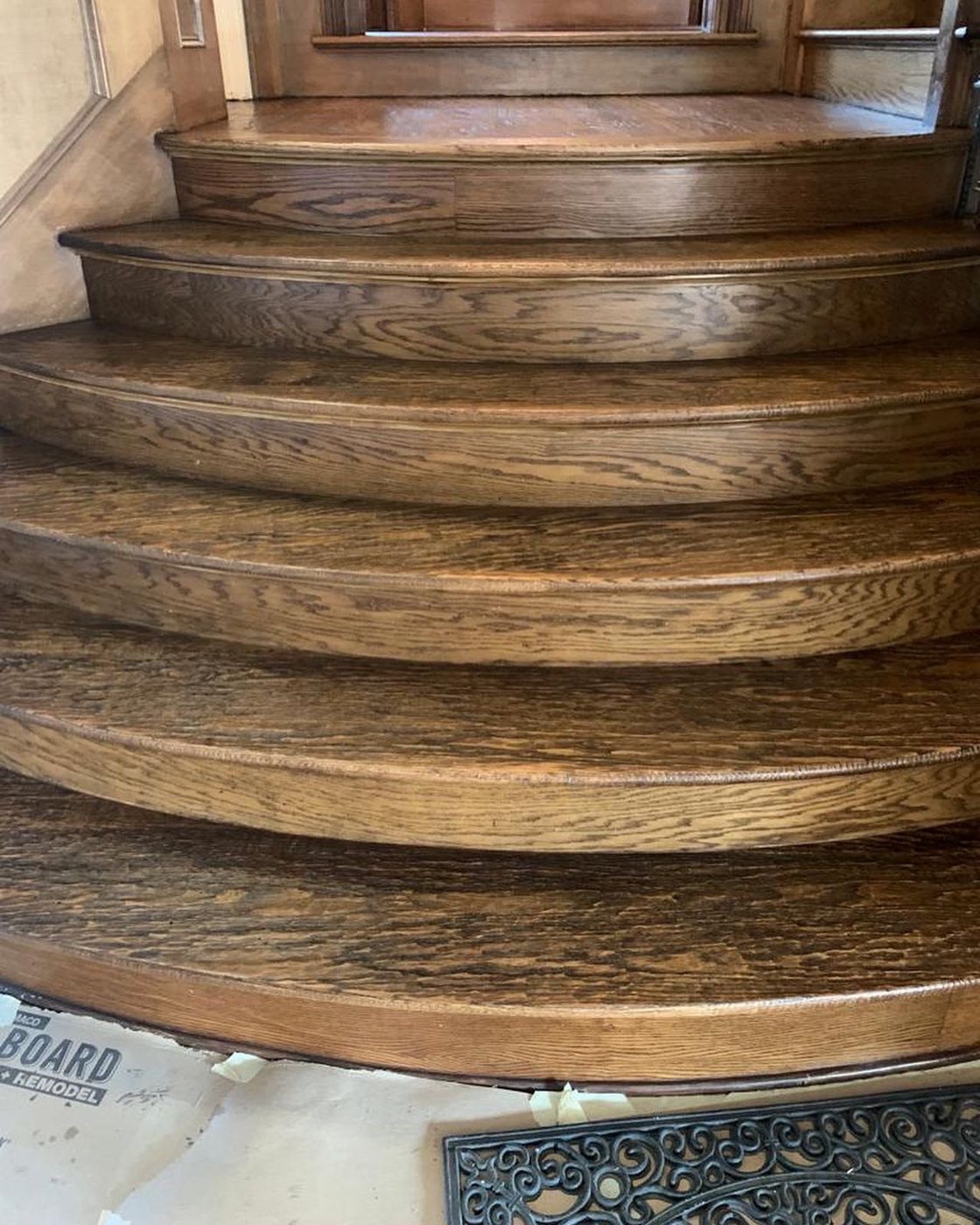
Usually, and if they’re going to match, do them at the same time. Matching stain color across two separate jobs is difficult, because wood takes stain differently depending on species, age and how it was sanded. Doing both in one pass with the same batch gets you a far closer match.
If the stairs are a different species than the floor, which is common, a perfect match may not be achievable at all. Sometimes a deliberate contrast looks better than a near-miss. We’ll put samples on your actual treads before committing.
For the adjacent floor work, see hardwood floor refinishing.
Frequently asked questions
How much does it cost to refinish stairs?
Stairs are priced per step rather than per square foot, because labor drives the cost rather than area. Condition, whether carpet is being removed, and whether balusters are included all move the number. Our cost guide covers DFW ranges.
How long does it take to refinish a staircase?
A typical flight takes a few days including cure time, longer if we’re alternating steps to keep the staircase usable. Removing carpet and staples adds time before sanding even starts.
Can you refinish just the stairs?
Yes. Stairs often wear faster than floors because traffic concentrates on them. If the floors are fine, refinishing stairs alone is normal work. Matching the existing floor color is the main consideration.
Do you have to remove the carpet first?
Yes, along with padding, tack strips and every staple. Staple removal is slow and it’s part of why converting carpeted stairs costs more than refinishing bare ones.
Can squeaky stairs be fixed during refinishing?
Yes, and it’s the best time to do it. With treads exposed and before finish goes on, loose steps can be secured and fasteners concealed. Doing it after finishing usually means visible repairs.
Thinking about your stairs?
We’ll look at what’s under the carpet if there is any, tell you whether the treads can be refinished or need replacing, and quote it per step with the schedule included.
Bernard Hardwood Floors has been family owned in Irving since 1999. Licensed and insured, 4.9 stars across 127 Google reviews.
Request an estimate or call (469) 870-5631, Monday through Saturday, 8am to 6pm.